The right personalized coffee packaging starts with measurable product needs rather than artwork. Roasted coffee releases carbon dioxide after roasting and remains sensitive to oxygen, moisture, and light, so bag structure, seal quality, valve type, and storage conditions affect shelf performance. A 2020 review in Foods described hundreds of volatile compounds associated with coffee aroma, while packaging research commonly measures oxygen transmission in cc/m²/day rather than relying on terms such as “high barrier.” For a 250 g retail bag, dimensions also need enough headspace for sealing, a suitable one-way valve position, and room for labels or printed batch information. Packaging should be specified around coffee type, expected shelf life, filling method, sales channel, and annual volume before visual finishes are selected.
Fresh roasted coffee keeps releasing CO₂ after it leaves the roaster, and the release rate changes with roast level, bean structure, storage temperature, and time. Research published in 2017 on roasted coffee degassing found that grinding greatly accelerated gas release because more internal surface became exposed. A bag filled shortly after roasting therefore has a different pressure-management requirement from coffee allowed to degas before packing.
That difference is why a one-way degassing valve is common on whole-bean specialty coffee bags. The valve lets internal gas leave while limiting outside air entry, provided the valve and package seals work as intended. For a 250 g or 1 kg product packed soon after roasting, the roaster should test actual filled bags instead of assuming one valve specification works for every roast.
Valve placement needs to be included in the artwork file. Moving a valve by even 20–30 mm can place it over origin information, a logo, or a required label area on a compact retail pack.
Once gas management has been established, oxygen exposure becomes the next specification to examine. Coffee aroma includes more than 800 identified volatile compounds in published literature, and many desirable compounds are present at low concentrations. Oxygen exposure can accelerate oxidation, while moisture transfer can affect texture and storage stability.
Packaging suppliers normally describe barrier performance with OTR and WVTR. OTR is commonly reported as the amount of oxygen passing through a square metre of material over 24 hours under stated test conditions; WVTR uses a similar area-and-time approach for water vapour. A supplier quoting a barrier figure without temperature and relative-humidity test conditions leaves an important part of the specification missing.
| Specification | What to request | Why it matters |
|---|---|---|
| OTR | Test value, temperature, RH | Helps compare oxygen barrier |
| WVTR | Test value and test conditions | Helps compare moisture barrier |
| Film thickness | Total and layer data where available | Affects stiffness and sealing |
| Seal data | Recommended temperature range | Helps set packing equipment |
| Valve | Type, position, application method | Manages CO₂ after packing |
| Tolerance | Width, height, gusset and valve tolerance | Reduces filling variation |
Barrier requirements then need to be matched to distribution time. Coffee sold within 30 days of roasting has a different commercial route from a product expected to remain in distribution for 6–12 months. Warehousing, parcel shipping, retail display, temperature, and repeated consumer opening can all extend the period during which the package must protect the product.
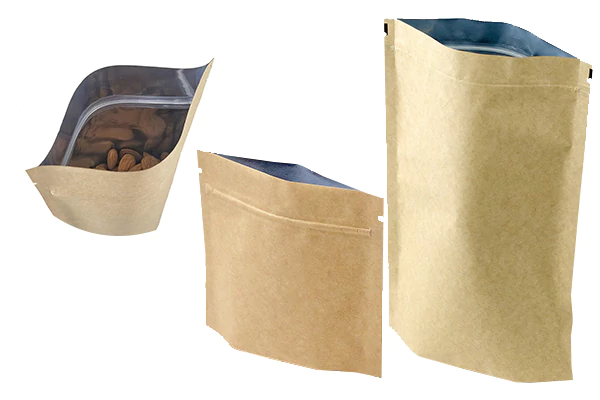
Bag format should be selected after that route is mapped. Stand-up pouches provide a broad front panel and use a bottom gusset to create shelf stability; flat-bottom bags offer front, back, side, and bottom surfaces; side-gusset bags suit many larger-volume formats. A 2024 product range with 12 coffee SKUs may also need more artwork versions than a roaster selling only three permanent blends.
Package dimensions cannot safely be selected from nominal weight alone. Two coffees weighing 250 g can occupy noticeably different volumes because roast degree, bean origin, bean size, and grind condition change bulk density. Darker roasting generally causes beans to expand and lose mass, so a bag tested with one coffee should not automatically be approved for every product at the same net weight.
A useful filling trial uses at least 10–20 production-representative bags per size. Fill each with the intended coffee, close the zipper where fitted, heat-seal the top, and inspect the package after 24 hours. Measure remaining seal space, standing stability, gusset opening, valve clearance, and whether the printed front panel distorts after filling.
A package that looks correct when empty can look underfilled after 250 g is added, while a smaller version may leave too little top area for repeatable sealing. Physical filling tests resolve both issues before thousands of printed bags are ordered.
Resealability follows the same use-based approach. A 250 g household coffee pack may be opened 10–20 times if a consumer uses roughly 12–20 g per brewing session. A zipper can therefore improve everyday handling, but its position must leave enough space above it for filling and the final heat seal.
For a single-use 30 g sample, a zipper may provide little practical benefit. For a 1 kg household or foodservice pack, the opening width and zipper strength deserve more attention because the package is heavier and may remain open longer. Feature selection should follow actual use frequency rather than the number of components a supplier can add.
Material structure comes next because appearance alone cannot identify package performance. A matte paper-look pouch can contain polymer films and barrier layers, while a glossy pouch may use a different multilayer construction with similar external dimensions. Buyers should request a written material specification instead of classifying packaging by touch or appearance.
Sustainability requirements make that specification more important. Flexible packaging markets have increasingly moved toward mono-material structures designed to improve compatibility with certain recycling streams, although collection and recycling availability varies by country and municipality. In 2022, the EU generated about 186.5 kg of packaging waste per person, according to Eurostat, keeping packaging material use under regulatory and commercial scrutiny.
For brands reviewing eco friendly stand up pouches, material composition should be checked alongside barrier performance, sealability, valve compatibility, and local disposal infrastructure. A recycling-related claim should match the exact finished package, including zipper and valve where applicable, rather than only the main film.
European packaging requirements are also changing. Regulation (EU) 2025/40 on packaging and packaging waste entered into force in 2025 and applies from August 2026, with staged requirements continuing over later years. Coffee brands selling into EU markets should therefore treat material documentation, labeling requirements, package minimisation, and recyclability information as specification work rather than artwork added near launch.
Printing method then needs to match order structure. Digital printing is often practical when a roaster sells several origins in smaller quantities because artwork can change without the same plate or cylinder setup associated with conventional processes. Flexographic and gravure production can become commercially suitable as repeat volumes rise, but exact break-even quantities depend on supplier pricing, number of colors, bag construction, and run length.
Consider a roaster with 8 SKUs requiring 3,000 bags each. The annual requirement is 24,000 bags, but a 10,000-unit minimum applied per artwork would require 80,000 bags rather than 24,000. Asking whether MOQ applies per design, size, structure, or combined order prevents inventory assumptions from being based on the headline minimum.
| Annual situation | Packaging approach worth pricing |
|---|---|
| 3 SKUs × 2,000 units | Digital print or branded stock pouch + label |
| 8 SKUs × 3,000 units | Compare digital print with combined production options |
| 4 SKUs × 25,000 units | Quote flexographic/digital alternatives |
| 2 stable SKUs × 100,000+ units | Compare high-volume conventional printing |
Artwork needs to follow the physical bag rather than a flat PDF preview. A flat-bottom pouch can contain five printable faces, but folds, seals, zipper areas, and valve placement reduce usable space. Keeping important copy several millimetres away from structural boundaries helps account for normal converting and cutting tolerances specified by the manufacturer.
Information hierarchy also matters on a small package. A 250 g bag may need the brand, coffee name, origin, net quantity, roast information, tasting notes, preparation guidance, barcode, business details, and legally required statements. Giving every item the same font size makes the front panel harder to scan, so permanent brand information and variable coffee information should be separated visually.
Variable information deserves its own production plan. A roaster offering 15 seasonal coffees in 2026 may change origin, harvest, processing method, lot number, or tasting notes several times during the year. Printing all variable data directly onto a large inventory of bags increases the chance that unused packaging becomes outdated.
A mixed system can reduce that exposure: permanent information is printed on the pouch, while frequently changing details appear on a label or suitable variable-data area. If 5,000 bags cost less per unit than 1,000 but 30% remain unused after an artwork change, the apparent unit-price saving can disappear once obsolete inventory is included.
Cost comparisons therefore need more than a supplier's per-bag quotation. For 50,000 units, a difference of $0.03 per pouch changes purchasing cost by $1,500. Freight, printing setup, plates or cylinders, storage, inspection losses, repacking, import charges where applicable, and discarded old artwork can exceed that difference.
Shipping efficiency should be measured at the carton level as well. A pouch that adds only 5 mm of unnecessary filled thickness can affect how many packs fit into a case, and the effect becomes larger across thousands of units. Case dimensions, pallet configuration, parcel rates, and storage space belong in the packaging comparison before final dimensions are approved.
Supplier quality control becomes more important once dimensions and print files are fixed. Request tolerances for width, height, gusset depth, valve location, film thickness, and sealing areas. A 3 mm movement may be visually minor on a 1 kg bag but much more noticeable around a small logo, tear notch, or zipper on a 100 g pouch.
Color should also be evaluated on the production material. Screen colors are emitted in RGB, while commercial package printing normally works with process inks, spot colors, or supplier-specific color systems. A 2026 artwork viewed on a calibrated monitor can still differ from ink printed over matte, metallic, transparent, or paper-like substrates.
Approve a physical print sample when color consistency is commercially important. Record the approved artwork revision, color reference, material structure, finish, valve position, and dimensions so the next production run can be compared with the same specification.
Functional testing should follow visual approval. A useful pre-production check can include 20–30 filled packages across several sealing cycles rather than inspecting one attractive sample. Record seal appearance, zipper function, valve location, tear behavior, standing stability, barcode scanning, package dimensions, and leakage after normal handling.
Shipping tests can extend the check further. Pack finished coffee into the actual shipping carton, use the intended number of bags, and reproduce the handling expected in parcel or retail distribution. Inspect packs after 24–72 hours for abrasion, corner damage, seal stress, scuffing, ink transfer, and loss of shelf shape.
Shelf-life testing requires more time but provides better information than choosing a barrier from a catalog. Keep samples from the same roast in candidate packaging structures and assess them at planned intervals such as day 0, 30, 60, 90, and 180. Where resources permit, combine sensory assessment with package integrity and analytical measurements relevant to the product.
The final purchasing specification should record every item that can change the finished bag: dimensions, material structure, thickness, OTR/WVTR test conditions, print process, artwork revision, finish, zipper, tear notch, valve model and location, seal areas, tolerances, carton quantity, and inspection method. In a 12-month supply relationship, that document provides a consistent reference for repeat orders and supplier discussions.
Ordering can then follow realistic sales volume rather than the largest quantity that produces the lowest quoted unit price. A brand selling 4,000 packs per month uses about 48,000 packs per year before allowing for growth, product changes, and waste; buying 100,000 printed bags may therefore hold more than two years of packaging inventory.
A better order quantity accounts for monthly sales, supplier lead time, reorder frequency, SKU changes, and available storage. When the coffee, barrier specification, bag dimensions, printing method, compliance requirements, test results, and annual usage all fit the same commercial plan, personalized packaging can protect product quality without forcing unnecessary material or inventory into the supply chain.