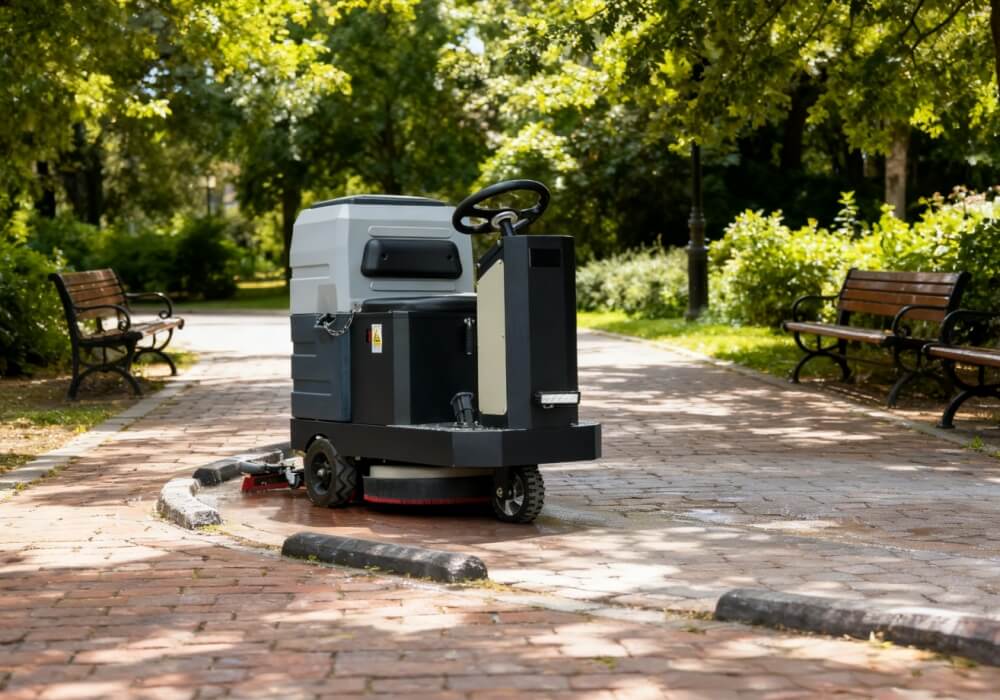
A supermarket floor scrubber helps retail stores maintain clean and safe aisles by combining brushing, water control, and wastewater recovery in one machine. Commercial models can clean from 1,000 to more than 5,000 m² per hour depending on size and design. With supermarkets operating 12–24 hours daily in many regions, efficient floor cleaning equipment reduces manual work while improving surface appearance and hygiene.
Supermarket floors receive constant foot traffic from customers, employees, and delivery teams. A store with 10,000 daily visitors can quickly accumulate dust, food particles, beverage spills, and marks from shopping carts. Unlike simple mopping, automatic scrubbers use rotating brushes to loosen dirt and vacuum systems to collect used water. Modern machines can remove contamination while leaving floors dry within minutes.
The demand for professional cleaning equipment increased as large retail facilities expanded their floor areas. In 2020–2025, many supermarket operators invested in automated cleaning solutions because labor availability and hygiene requirements changed significantly. A machine that cleans 3,000 m² per hour can replace several hours of manual cleaning work during busy periods.
“Retail cleaning is not only about appearance. Floor conditions affect customer safety, employee comfort, and daily store operations.”
Different areas inside supermarkets require different cleaning methods. Checkout zones usually have higher traffic density because customers stop, queue, and move slowly. Fresh food departments often require more frequent cleaning because water, organic materials, and small particles can reach the floor surface. Entrance areas collect outdoor dust, especially during rainy or winter seasons.
A suitable supermarket floor scrubber should match the store layout, floor material, and cleaning schedule. Compact walk-behind models are commonly used between shelves because they can turn in narrow spaces. Ride-on machines are more suitable for large open areas such as central aisles, warehouse-style stores, and shopping centers.
| Floor Area | Recommended Machine Type | Typical Cleaning Capacity |
|---|---|---|
| Small aisles and narrow spaces | Walk-behind scrubber | 1,000–2,500 m²/hour |
| Medium supermarkets | Compact ride-on scrubber | 2,500–4,500 m²/hour |
| Large retail facilities | Heavy-duty ride-on model | 5,000+ m²/hour |
Brush design directly affects cleaning results. Disc brushes provide wide contact with smooth floors and are often used on polished concrete, vinyl, and ceramic surfaces. Cylindrical brushes can collect small particles while scrubbing, making them useful in areas where packaging materials or food debris may appear.
The choice of brush pressure also influences floor protection. A study published in 2019 on commercial floor maintenance showed that excessive mechanical pressure could increase surface wear on softer materials. Many professional machines now allow operators to adjust brush pressure according to different flooring conditions.
Water control systems are another important part of supermarket cleaning. Traditional mopping methods usually require repeated bucket changes and may leave uneven moisture across the floor. Automatic scrubbers separate clean water and recovery water through independent tanks. Some commercial units reduce water consumption by 20–40% compared with older cleaning methods through controlled water distribution.
Cleaning chemicals also need proper management. Too much detergent may leave residue on floors, while insufficient cleaning solution may reduce dirt removal performance. Modern scrubbers often include adjustable detergent systems that allow operators to select suitable concentrations according to floor conditions.
Battery performance determines how long a machine can operate without interruption. Lithium-ion battery systems have become more common since around 2018 because they offer longer service cycles and faster charging compared with traditional lead-acid batteries. Many commercial scrubbers can operate for 3–6 hours on a single charge depending on battery capacity and cleaning intensity.
Noise level is important because supermarkets usually clean during business hours. Equipment operating below approximately 70 dB can reduce disturbance for shoppers and employees. Low-noise motors and improved vacuum systems allow cleaning tasks to take place near customers without affecting the shopping environment.
“A cleaning machine used in a retail environment must balance cleaning ability, operating time, noise level, and ease of use.”
Operator efficiency depends on machine design. Features such as automatic brush adjustment, simple control panels, and easy tank access reduce training requirements. In a store with multiple employees using the same equipment, simple operation helps maintain consistent cleaning quality.
Maintenance schedules influence long-term equipment performance. Daily tasks usually include emptying recovery tanks, cleaning filters, and checking squeegee blades. Weekly inspections may include brush condition checks, battery inspection, and connection testing. Proper maintenance can extend machine service life by several years.
Food retail environments also have strict safety requirements. Floors around beverage shelves, refrigerated sections, and entrances may become slippery when spills occur. Scrubbers with strong water pickup systems can reduce remaining moisture and allow customers to continue walking through cleaned areas sooner.
Energy efficiency has become more important for supermarket operators. Large retail chains manage many locations, so small improvements in water use, battery efficiency, and cleaning time can influence operating expenses. Machines designed with eco modes can reduce resource consumption while maintaining acceptable cleaning performance.
The development of autonomous cleaning technology has changed commercial floor care since the early 2020s. Robotic scrubbers equipped with sensors can follow programmed routes, avoid obstacles, and return to charging stations automatically. In large facilities, these systems can support routine cleaning tasks while employees focus on areas requiring manual attention.
When selecting equipment, supermarkets usually compare several factors:
-
Cleaning width and hourly productivity
-
Battery operating time
-
Water tank capacity
-
Floor compatibility
-
Noise level
-
Maintenance requirements
-
Availability of replacement parts
A small supermarket with limited aisle space may benefit from a compact walk-behind machine, while a large retail store with more than 10,000 m² of floor area may require a ride-on model with higher capacity.
“The best cleaning equipment is the one that fits the store environment, cleaning frequency, and daily operating conditions.”
Supermarket floor cleaning continues to move toward equipment that uses fewer resources while providing consistent results. With improved battery systems, better water recovery, and smarter controls, modern floor scrubbers provide retailers with a practical method for maintaining clean aisles and high-traffic areas throughout daily operations.